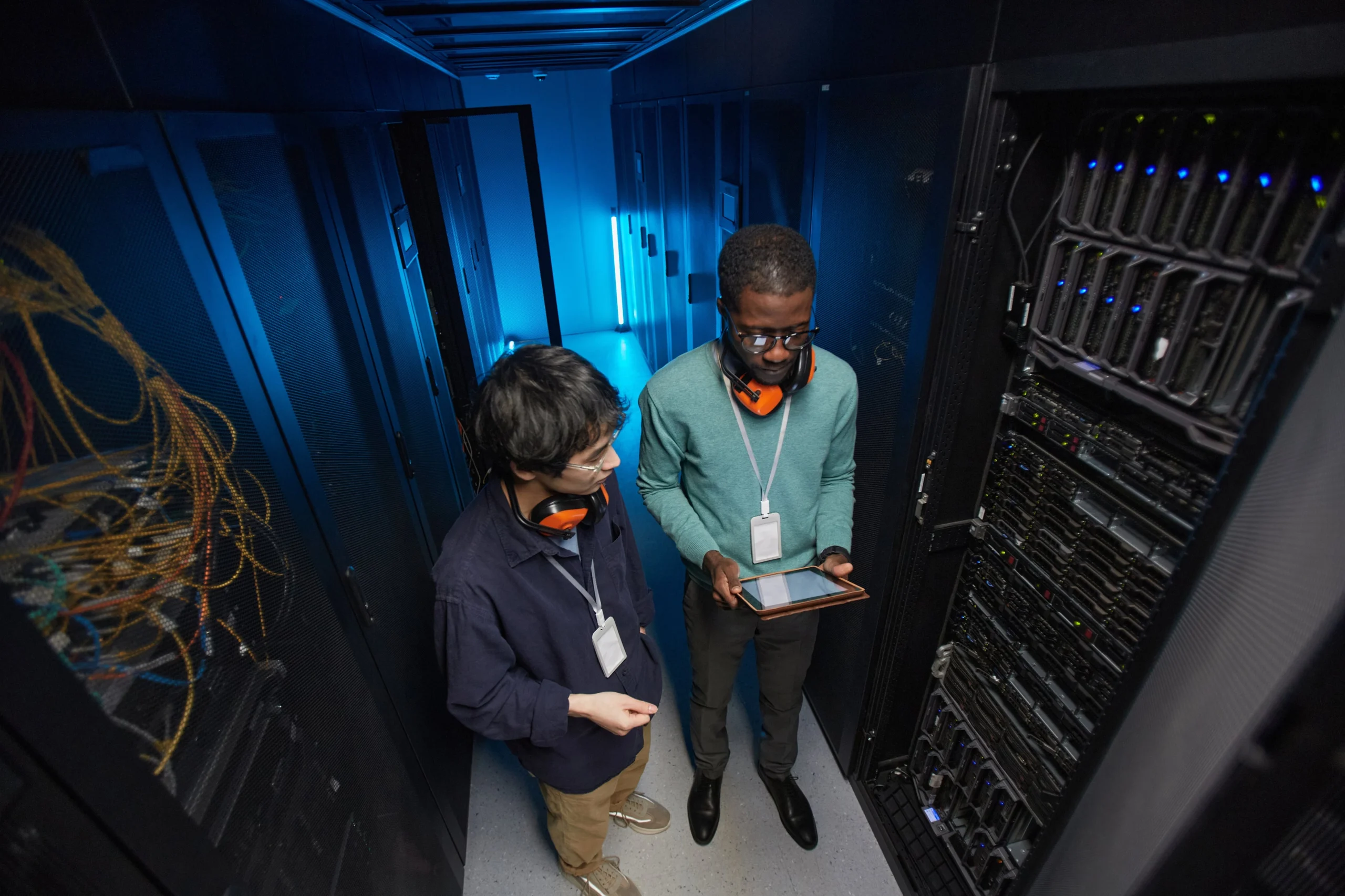
At Y&L Consulting, we believe our people are our greatest asset. We’re passionate about fostering a collaborative, inclusive environment where talented professionals can challenge themselves, grow their skills, and make a real impact.

Whether you’re an experienced consultant or just starting your career, you’ll find opportunities to work with cutting-edge technologies, world-class clients, and a team that values your ideas and ambitions. Discover your next career move with Y&L Consulting and help us shape the future of technology-driven business.

Why Y&L Consulting?

Work at the Heart of Innovation

Grow, Learn, and Lead

At Y&L, you’ll be part of a dynamic team that’s shaping the future of technology and business. We work with leading global organizations to solve complex challenges using the latest in cloud, AI, data analytics, SAP, and more.

Diversity, Inclusion, and Belonging

We celebrate what makes you unique. Y&L Consulting is dedicated to building a workplace where everyone feels valued, seen, and heard

Life at Y&L: What Our People Say

At Y&L, I’ve had the chance to work on transformative projects and learn from some of the best minds in the industry. The support for growth and innovation is truly unmatched.

The collaborative culture and focus on inclusion make Y&L a place where I feel empowered to bring my whole self to work.”

Our Values

Access to the Latest Innovations

Clients benefit from early access to new technologies, tools, and best practices.

Certified Expertise

Our consultants maintain up-to-date certifications, ensuring every solution is implemented to the highest standards.

Tailored Solutions

We leverage our partners' platforms to design and deliver solutions that are customized to each client's unique needs and industry requirements.

End-to-End Support

From strategy and planning to implementation and ongoing optimization, our partnerships enable us to provide comprehensive support at every stage of your technology journey.

Current Jobs

Job Description

We are seeking a dynamic and detail-oriented Lead Data Engineer – Business Analytics to join our team. This role is responsible for designing, building, and optimizing analytics-ready datasets within a modern data platform leveraging Databricks.

The ideal candidate will serve as a bridge between data engineering and business analytics, transforming raw, disparate data into trusted, performant, and governed datasets that enable enterprise reporting and self-service analytics.

This role will focus on developing and maintaining curated Silver and Gold layer data assets within a medallion architecture, where the semantic layer resides in Databricks rather than BI tools. You will partner closely with business stakeholders, data architects, and analytics teams to ensure alignment with business logic, KPIs, and enterprise data standards.

Key Responsibilities
Data Engineering & Modeling
  • Design, build, and maintain scalable data pipelines and curated datasets within the Databricks Lakehouse (Silver and Gold layers).
  • Develop and manage analytics-ready data models and semantic structures in Databricks, aligned to enterprise reporting needs.
  • Transform raw data into business-consumable datasets that reflect standardized definitions, KPIs, and metrics.
  • Apply dimensional modeling and other data modeling techniques within a distributed data environment.
Semantic Layer & Analytics Enablement
  • Own the semantic layer within Databricks, ensuring consistent definitions across reporting and analytics use cases.
  • Enable downstream consumption by visualization and analytics tools (e.g., Power BI) without reliance on embedded semantic modeling.
  • Partner with business analysts and reporting teams to optimize datasets for usability, performance, and scalability.
Performance Optimization & Data Quality
  • Optimize datasets and data models for performance, including query efficiency and scalability for enterprise reporting workloads.
  • Ensure data quality, integrity, and consistency across the full data lifecycle.
  • Implement and enforce data governance standards, including data security, masking, access controls, and cost controls.
Collaboration & Business Alignment
  • Work closely with business leaders and stakeholders to translate business requirements into scalable data solutions.
  • Align data structures to enterprise data dictionary and KPI definitions.
  • Communicate data model designs and dataset structures clearly to both technical and non-technical stakeholders.
Platform & Modernization
  • Support the evolution of the enterprise analytics platform within Azure and Databricks.
  • Contribute to best practices for CI/CD, deployment automation, and data engineering standards.
  • Assist in advancing data capabilities, including support for AI/ML use cases where applicable.
Qualifications
  • Bachelor’s degree in Information Technology, Computer Science, Business Analytics, or a related field.
  • 6+ years of experience in data engineering, data modeling, or analytics engineering roles.
  • Strong expertise in Databricks Unity Catalog, SQL, and Python for data transformation and pipeline development.
  • Proven experience designing and implementing data models within modern data platforms (e.g., Lakehouse architecture).
  • Experience working with medallion architecture (Bronze/Silver/Gold layers).
  • Understanding of BI tools (e.g., Power BI), with emphasis on dataset consumption rather than semantic layer ownership.
  • Experience with CI/CD pipelines, version control, and deployment processes.
  • Familiarity with Agile/Scrum delivery methodologies.
Skills and Competencies
  • Strong data modeling and analytical thinking skills.
  • Ability to translate business requirements into scalable data solutions.
  • Deep understanding of data transformation, optimization, and performance tuning.
  • Excellent communication and stakeholder management skills.
  • High attention to detail with a focus on data accuracy and quality.
  • Ability to lead initiatives and influence cross-functional teams.
  • Adaptability in a fast-paced, evolving data environment.
Working Conditions
  • This position may require occasional travel.
  • Flexible work hours may be necessary to meet project deadlines.

Apply Now
Or email your resume to career@ylconsulting.com

Job Description

In this role, you will work amongst Cloud, information security, technology, and business professionals in the financial services industry within an enterprise-level environment.

As the DevOps Engineer, you will be involved in design decisions, implementations, coding (Node.JS or .NET Core (C#)), and building and supporting CI/CD and automation relating to our AWS cloud and private cloud software deployments, as well as the automation of Configuration Management of all Development, Quality Assurance, User Acceptance, and Production servers.

Bring your skills involving VPC, EC2, Route53, IAM, Lambda, and other AWS concepts to deploy releases to higher environments (DEV/QA/Prod) through automation, and work closely and collaboratively with engineers in an Agile environment.

Essential Duties
  • Builds engineering automation tools using DevOps principles to help streamline and scale applications into a production environment. Develops, analyzes, and maintains scripts, tools, hardware, and systems that support and automate processes for software releases. Leverages scripting (Python, BASH, PowerShell, etc.) to build tools.
  • Creates automated, highly scalable, and repeatable processes. Proactively investigates, recommends, and develops enhancements to improve development and operational processes.
  • Actively participates in the release planning process to make sure everyone is thinking through the technical release processes. Deploys releases to higher environments (DEV/QA/Prod) through automation.
  • Works closely and collaboratively in an Agile environment with engineers and product teams to analyze issues and find new insights covering our business and operations.
  • Documents results of work and prepares status reports, including successes and failures for all systems, for submission to division and corporate management.
  • Maintains end-to-end security, ensuring best practices are implemented.
  • Troubleshoots and resolves application development, deployment, and operational issues.
  • Performs all other duties as assigned.
Qualifications
  • Bachelor’s degree in Information Technology or a related field of study from an accredited four-year college or university required.
  • Minimum of five (5) years of experience in AWS and automating CI/CD pipelines required.
  • AWS Certified Developer Associate and/or AWS SysOps Administrator Associate required.
  • AWS Solutions Architect Associate Certification required.
  • Experience in Release Engineering, Source Code Management, or related experience in an automated build, test, and deploy environment a plus.
  • Experience with Azure or Google Cloud a plus.
  • Experience automating Blue/Green, Canary, or other zero-downtime deployments.
  • Experience with microservices and/or event-driven architecture.
  • Experience using containerization technologies (Docker, Kubernetes, Mesos, or Vagrant).
  • Virtualization experience (VMware, Hyper-V, KVM) a plus.
  • Working knowledge of the Software Development Life Cycle.
  • Working knowledge of QA and test methodologies.
  • Knowledge of secure SDLC, OWASP Top 10, and CWE/SANS Top 25.
  • Knowledge of infrastructure tools: CloudFormation, Terraform.
  • Advanced understanding of VPC, EC2, Route53, IAM, Lambda, and other AWS concepts.
  • Understanding of DNS, NFS, TCP/IP, and other protocols.
  • Proficiency in Node.JS or .NET Core (C#).
  • Strong scripting skills in PowerShell, Python, or Bash.
  • NoSQL exposure (Cassandra, MongoDB, DynamoDB, etc.).
  • Strong practical Windows and Linux system administration skills in the cloud.
  • RDBMS exposure (MySQL, SQL Server, Aurora, etc.) a plus.
  • Able to build and administer CI/CD.
  • Able to sit for long periods of time performing sedentary activities.
Apply Now
Or email your resume to career@ylconsulting.com

Position Summary

The Business Analyst is responsible for working with business stakeholders, product owners, project managers, technical teams, QA, UX/UI, and vendors to define clear, complete, and development-ready requirements for business and technology initiatives.

This role translates business needs into actionable requirements, user stories, acceptance criteria, process flows, business rules, and supporting documentation. The Business Analyst helps ensure that work is well-defined before development begins, reducing rework, improving delivery predictability, and supporting successful testing, release readiness, and business adoption.

The ideal candidate is detail-oriented, structured, and comfortable working across business and technical teams to clarify needs, document decisions, resolve open questions, and ensure requirements are traceable from discovery through delivery.

Key Responsibilities

Requirements Discovery & Analysis

  • Facilitate discussions with business stakeholders, SMEs, product owners, and technical teams to understand business needs, pain points, workflows, and desired outcomes.
  • Translate stakeholder needs into clear business, functional, and system requirements.
  • Distinguish between business requirements, functional requirements, technical considerations, business rules, and implementation details.
  • Identify gaps, assumptions, dependencies, risks, and open questions early in the requirements process.
  • Ensure requirements are solution-aware but not prematurely overdesigned.

User Stories, Features & Acceptance Criteria

  • Create and maintain development-ready features, user stories, and acceptance criteria.
  • Write acceptance criteria in clear, testable formats, including Given / When / Then where appropriate.
  • Ensure user stories include business context, expected behavior, edge cases, dependencies, supporting documentation, and out-of-scope items.
  • Confirm that acceptance criteria are complete before work moves to development or testing.
  • Partner with product owners and technical leads to support backlog refinement and sprint readiness.

Documentation & Traceability

  • Maintain requirements documentation in the appropriate system of record, such as Confluence, Azure DevOps, Jira, SharePoint, or related delivery tools.
  • Document process flows, business rules, decision points, data needs, workflow impacts, and system behavior.
  • Link requirements to designs, mockups, logic documents, approvals, source materials, and related work items.
  • Keep feature and requirement documentation current as scope, decisions, or priorities change.
  • Support traceability from business need through requirements, development, testing, and release validation.

Stakeholder & Cross-Functional Collaboration

  • Serve as a bridge between business teams, product ownership, project management, UX/UI, QA, development, architecture, and operations.
  • Facilitate clarification sessions to resolve ambiguity before work enters development.
  • Support alignment between business priorities, user needs, system capabilities, and delivery constraints.
  • Help stakeholders understand tradeoffs, impacts, and dependencies related to requirement changes.
  • Escalate unresolved requirements questions, scope concerns, or decision gaps to the appropriate owner.

Backlog & SDLC Support

  • Support backlog grooming, refinement, prioritization, and readiness activities.
  • Help define Definition of Ready expectations for features and user stories.
  • Work with project managers and product owners to ensure requirements are aligned to release scope and delivery milestones.
  • Support change control by documenting requirement changes and assessing impact to scope, timeline, testing, and downstream teams.
  • Contribute to consistent requirements governance across software and technology initiatives.

Testing & UAT Support

  • Partner with QA and business testers to ensure test scenarios align with acceptance criteria.
  • Support UAT preparation by clarifying requirements, expected outcomes, workflows, and testable business scenarios.
  • Assist with defect triage by validating whether issues are defects, requirement gaps, design questions, or change requests.
  • Help translate UAT findings into actionable backlog items, requirement updates, or business decisions.
  • Confirm that completed work satisfies the documented business need and agreed acceptance criteria.

Process Improvement & Governance

  • Recommend improvements to requirements practices, templates, documentation standards, and delivery workflows.
  • Help standardize how requirements are gathered, approved, tracked, and handed off to delivery teams.
  • Support governance practices that improve transparency, accountability, traceability, and delivery predictability.
  • Identify recurring sources of rework and propose practical improvements to reduce ambiguity and late-stage requirement changes.

Required Qualifications

  • Bachelor’s degree in Business, Information Technology, Information Systems, Project Management, or related field, or equivalent work experience.
  • 3–6 years of business analysis experience supporting technology, software development, systems integration, SaaS implementation, or enterprise application projects.
  • Experience gathering, documenting, and validating business and functional requirements.
  • Experience writing user stories, features, acceptance criteria, business rules, and process flows.
  • Familiarity with Agile, Scrum, Waterfall, or hybrid delivery methods.
  • Experience working with cross-functional teams, including business stakeholders, product owners, developers, QA, UX/UI, project managers, and vendors.
  • Strong written and verbal communication skills.
  • Strong analytical, organizational, and problem-solving skills.
  • Proficiency with Microsoft 365, Teams, Excel, Word, PowerPoint, and collaboration tools.
  • Experience with delivery tools such as Jira, Confluence, and Asana.

Core Competencies

Requirements Elicitation & Analysis Business Process Documentation User Story Writing Acceptance Criteria Development Stakeholder Communication Analytical Thinking Detail Orientation Systems Thinking Problem Solving Backlog Support UAT Support Documentation Discipline Cross-Functional Collaboration Change Impact Analysis Continuous Improvement

Position Summary

The Project Manager is responsible for leading the planning, coordination, execution, and reporting of cross-functional business and technology initiatives. The role serves as the operational delivery lead, ensuring projects are delivered on time, within scope, and with clear stakeholder alignment.

Working closely with business leaders, product owners, business analysts, technical teams, vendors, and executive sponsors, the Project Manager establishes project governance, manages risks and dependencies, facilitates communication, and provides transparency into project health, progress, and outcomes.

This role is ideal for an individual who excels at organizing complex work, driving accountability, and creating structure in a dynamic environment while balancing business objectives, delivery timelines, and resource constraints.

Key Responsibilities

Project Planning & Execution

  • Lead projects from initiation through implementation and operational readiness.
  • Develop and maintain project charters, project plans, schedules, milestones, and deliverables.
  • Define project scope, success criteria, assumptions, constraints, and dependencies.
  • Coordinate project activities across business and technical teams.
  • Ensure milestones are based on measurable deliverables and business acceptance, agreed timelines, and quality standards.
  • Support Agile, Waterfall, or hybrid delivery methodologies as appropriate.

Governance & Delivery Management

  • Establish and maintain project governance structures.
  • Facilitate project status meetings, steering committee meetings, and stakeholder reviews.
  • Maintain RAID logs (Risks, Assumptions, Issues, Dependencies).
  • Create and maintain RACI matrices and project accountability frameworks.
  • Track project health, milestones, key decisions, and action items.
  • Escalate issues and risks proactively with mitigation recommendations.

Stakeholder Management

  • Serve as the primary coordination point between business stakeholders, IT, vendors, and leadership.
  • Facilitate requirements discussions and ensure alignment on priorities and outcomes.
  • Communicate project status, accomplishments, risks, and decisions to stakeholders.
  • Manage expectations regarding scope, schedule, resource availability, and project constraints.

Reporting & Communication

  • Prepare executive-ready project status reports and dashboards.
  • Deliver clear communication regarding project progress, risks, milestones, and decisions.
  • Track and report delivery metrics, schedule performance, and milestone adherence.
  • Maintain project documentation and ensure information is current and accessible.

Risk & Change Management

  • Identify project risks and dependencies early.
  • Develop risk mitigation and contingency plans.
  • Manage change requests and assess impact on scope, timeline, cost, and resources.
  • Support project recovery efforts when projects deviate from plan.

Operational Readiness & Release Support

  • Coordinate go-live readiness activities.
  • Support testing, UAT planning, deployment readiness, communications, and transition activities.
  • Ensure operational support teams are prepared for production releases.
  • Validate completion of readiness criteria before implementation.

Required Qualifications

  • Bachelor's degree in Business, Information Technology, Project Management, or related field.
  • 4–7 years of project management experience.
  • Scrum Master.
  • Experience managing technology, software development, SaaS implementation, systems integration, or enterprise application projects.
  • Experience coordinating cross-functional teams and third-party vendors.
  • Strong organizational, planning, and communication skills.
  • Experience creating:
    • Project Charters
    • Project Plans
    • RAID Logs
    • RACI Matrices
    • Executive Status Reports
    • Meeting Agendas and Action Registers
  • Proficiency with Microsoft 365, Excel, PowerPoint, Teams, and project management tools such as Jira, Confluence, and Asana.

Core Competencies

Project Planning & Organization Accountability & Follow-Through Stakeholder Management Communication & Facilitation Risk Management Decision Support Business Analysis Fundamentals Executive Reporting Vendor Coordination Continuous Improvement Adaptability & Change Leadership

Responsibilities

  • Design, architect, and develop end-to-end custom enterprise applications including frontend, backend services, database, and system integrations using Microsoft .NET technologies.
  • Independently build full-stack solutions including UI development, API design, backend services, data models, and integration layers with internal and external systems.
  • Develop scalable web applications using ASP.NET Core, Web APIs, modern JavaScript frameworks, and responsive UI technologies.
  • Design and implement RESTful APIs, microservices, and integration services to connect with external platforms such as healthcare systems, APIs, payment systems, identity providers, and third-party services.
  • Architect and optimize SQL Server databases, including schema design, stored procedures, indexing strategies, and performance tuning.
  • Build secure and compliant systems with authentication, authorization, data protection, and secure API communication.
  • Lead technical architecture decisions, including technology selection, system design, integration strategies, and cloud deployment models.
  • Develop and maintain cloud-enabled services and integrations using Azure services such as Azure Functions, API Management, and storage services when needed.
  • Work independently with minimal supervision and take ownership of delivering complete solutions from concept through production deployment.

Qualities

  • 10+ years of full-stack software development experience building enterprise-grade applications using Microsoft .NET technologies.
  • Proven experience independently building and delivering complete applications end-to-end, including frontend, backend, database, integrations, and deployment.
  • Strong expertise in C#, ASP.NET Core, Web APIs, and modern full-stack development patterns.
  • Extensive experience designing scalable architectures, RESTful APIs, and microservices-based systems.
  • Strong understanding of database architecture and performance optimization in SQL Server.
  • Experience integrating applications with third-party APIs, enterprise systems, and external platforms.

Skillsets

Frameworks

ASP.NET ASP.NET MVC .NET Core / .NET 6 Web API Entity Framework Entity Framework Core Microservices Architecture Windows .NET Services REST API Development

Languages

C# JavaScript TypeScript jQuery Angular JSON HTML5 CSS3 Bootstrap

Databases

SQL Server Stored Procedures Query Optimization Database Design Indexing

Integration

REST APIs Third-party API Integration OAuth / Token-based Authentication

Cloud & DevOps

Azure Functions Azure App Services Azure Storage Azure Service Bus CI/CD Pipelines Azure DevOps Git

Job Summary

We are seeking a Senior QA Analyst with strong manual and functional testing expertise across web, backend, middleware, and API-driven enterprise applications. The role requires hands-on testing experience, strong SQL and API validation skills, and deep involvement in Agile delivery environments using Azure DevOps or similar tools.

The candidate will be responsible for end-to-end testing activities, including test design, execution, defect management, and cross-team collaboration.

Key Responsibilities

  • Analyze functional and technical requirements to design detailed test scenarios and test cases with clear expected results, while maintaining full traceability to requirements.
  • Participate in test planning, estimation, and review activities with QA, development, and business teams.
  • Execute functional, integration, system, and regression testing across web applications, backend job/batch processes, and middleware services.
  • Perform REST API testing, including request/response validation, payload verification, and error handling, using tools such as Postman or equivalent.
  • Write and execute SQL queries to validate backend data.
  • Log, track, and manage defects using Azure DevOps (ADO) or similar tools such as JIRA or HP ALM/Quality Center, and collaborate with development teams.
  • Actively participate in Agile ceremonies, including stand-ups, sprint planning, grooming, and retrospectives, providing clear status updates, risks, and blockers.
  • Create and maintain test documentation, including test plans, test cases, and test summary reports.
  • Assist in analyzing production or customer-reported issues.
  • Cross-train on multiple applications and support additional teams as needed.
  • Demonstrate strong communication, analytical thinking, and troubleshooting skills.

Required Skills

  • 10+ years of QA / Manual Testing experience in enterprise environments.
  • Strong experience in functional, integration, system, and regression testing.
  • Hands-on experience testing web applications, backend batch/job processes, and middleware services. Must Have
  • Strong experience with Azure DevOps (ADO) or similar tools (JIRA, HP ALM/Quality Center, etc.). Must Have
  • Strong REST API testing experience and the ability to write and execute SQL queries for data validation. Must Have
  • Experience working in Agile environments.
  • Strong communication, analytical, and stakeholder management skills.
  • Healthcare domain experience is a plus.

Responsibilities & Skills

  • A strong development background, with knowledge of back-office investment operations.
  • Builds complex SQL queries against base and aggregate tables.
  • Reviews queries for investment system performance issues.
  • Participates in the design, development, and integration of investment databases.
  • Maintains metadata and business glossaries for the Data Warehouse, and participates in data quality and data governance initiatives.
  • Implements data management standards, monitoring, processes, and technologies.
  • Documents data dictionary and data mapping/transformation rules.
  • Works extensively with business analysts and investment professionals to analyze business problems.
  • Supports daily activity of the investment control systems areas by creating and maintaining custom reports and programs, and by providing technical support for system and software issues.
  • Assists customers in creating and running test scripts for data loads and report development.
  • Strong communication, presentation, and interpersonal skills.
  • Proficient ability to explain technical information to a non-technical audience.
  • Ability to learn new concepts, systems, and software independently and quickly.
  • Willingness to take initiative, seeing problems through to final completion.
  • The ability to handle diverse situations and rapidly changing priorities with deadlines.

Minimum Requirements

  • Graduation from an accredited four-year college or university.
    Each year of related experience over the required may be substituted for one year (30 semester hours) of required college credit.
  • 5+ years of data analysis experience.
  • 5+ years of SQL experience.
  • 3+ years of SSAS experience.

Additional Preferred Skills

  • Experience in general accounting, investment accounting, account reconciliation, and writing procedures.
  • Experience working in the ‘R’ statistical programming language.
  • Experience working in PACE as a developer writing uploader and exporter code.
  • Familiar with all aspects of the Eagle PACE warehouse, including scheduling, report writing, data stewardship, portal, and data model/schemas.
  • Familiar with Eagle Modules (Message Center, Scheduler, Workflow Manager, Security Reference Manager, etc.).
  • Hands-on and extensive experience with many of the following technologies: Crystal Reports, .NET (VB or C#), MS SQL Server, MS Access/Excel, FIX, SWIFT, and XML.